Megakaryocyte and platelet group
at the Department of Experimental Biomedicine I, University Hospital Wuerzburg
Research Focus
Blood platelets are essential for maintaining vascular integrity. Following vascular injury, they rapidly adhere to exposed subendothelial structures and form a hemostatic plug to prevent excessive blood loss. To maintain normal platelet numbers throughout life, the body continuously balances platelet production and clearance.
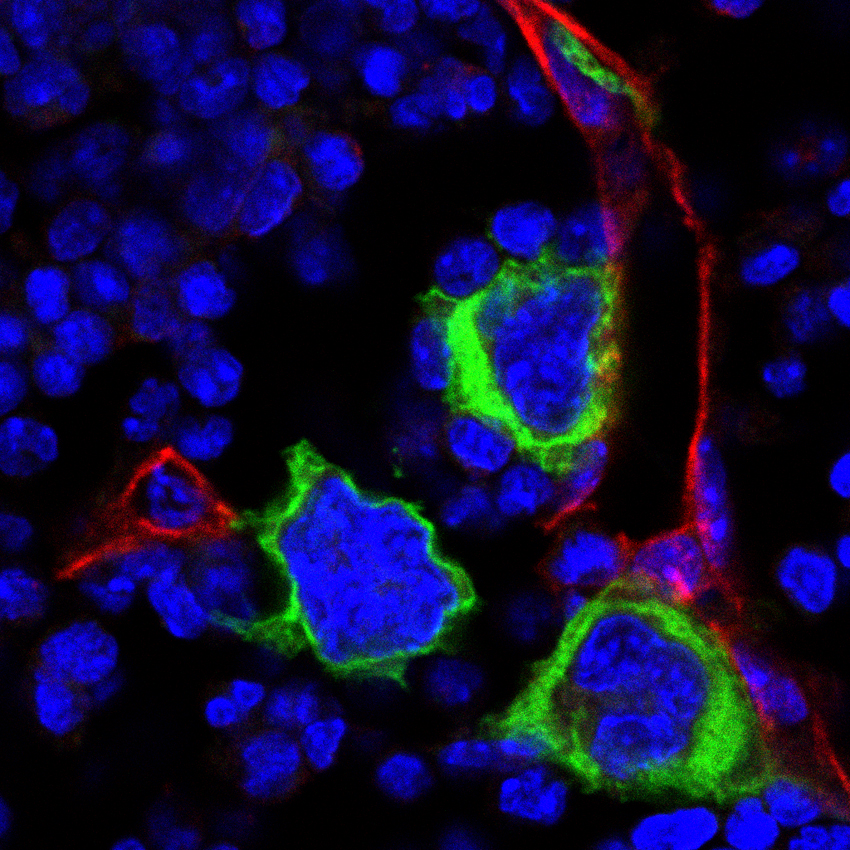
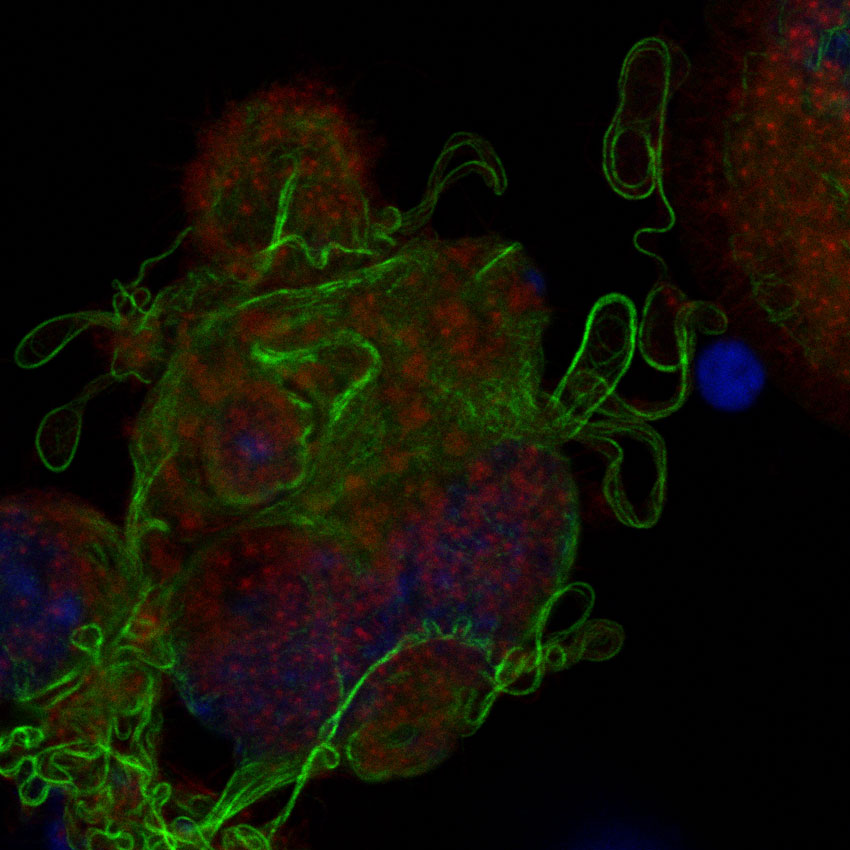
Platelets are generated by megakaryocytes in the bone marrow through a unique differentiation process. Positioned close to the bone marrow sinusoids, megakaryocytes undergo extensive cytoskeletal remodeling, extend proplatelets into the bloodstream, and ultimately release mature platelets. Defects in this process can lead to thrombocytopenia and bleeding disorders, while excessive platelet activation contributes to thrombotic diseases such as myocardial infarction and ischemic stroke.
Our research aims to understand the molecular and cellular mechanisms that regulate platelet biogenesis and platelet function in health and disease. We investigate how megakaryocytes integrate biochemical, mechanical, and immunological signals from their bone marrow microenvironment to control polarization, proplatelet formation, and platelet release. A particular focus lies on cytoskeletal dynamics and signaling pathways that orchestrate these processes, including the use of optogenetic approaches that enable precise spatiotemporal control of protein function in megakaryocytes and platelets.
In addition, we explore how ageing, chronic inflammation, and immune senescence reshape the bone marrow niche and influence megakaryocyte biology, platelet production, and platelet function. By combining advanced imaging, engineered in vitro systems, omics technologies, and experimental disease models, we aim to identify fundamental mechanisms that provide new opportunities for the diagnosis and treatment of platelet disorders and thrombo-inflammatory diseases.